In early May, we launched a survey asking Marin Elementary parents and caregivers about technology use in their children's classrooms. The survey has since circulated to other AUSD school sites, and we continue to welcome responses from families across the district.
As of June 1, we have received 171 responses. Marin families make up the majority of respondents — 25% of the school's families have participated so far. As distribution expands across the district, we expect that number to grow.
Survey Highlights
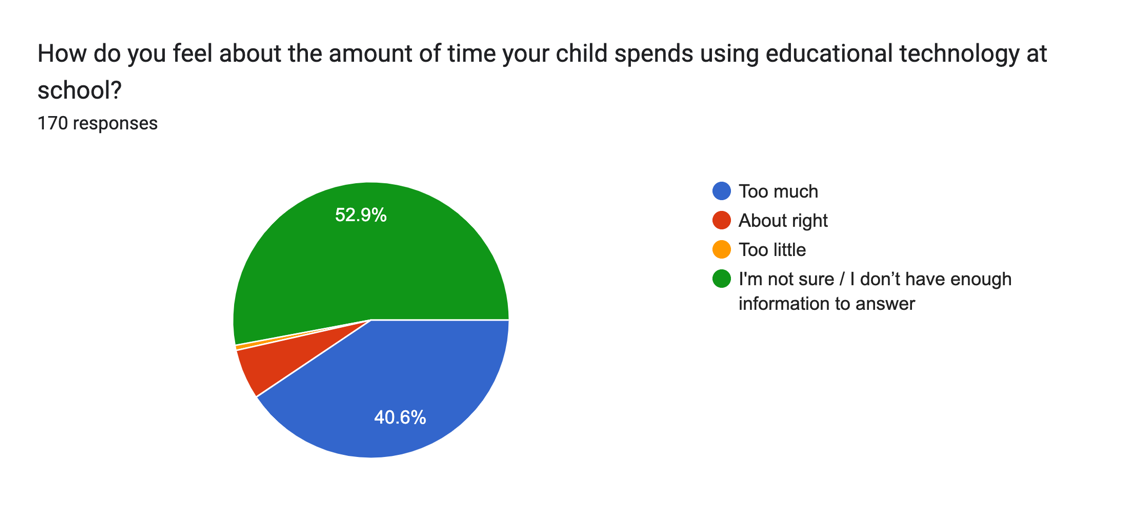
1. A majority of parents want, but do not receive, basic information about their children’s use of technology in school.
87% of parents do not know what technologies are used or how much time their children spend on devices. Comments indicate a demand for clarity on classroom tech usage, including specific apps, duration, and rationale.
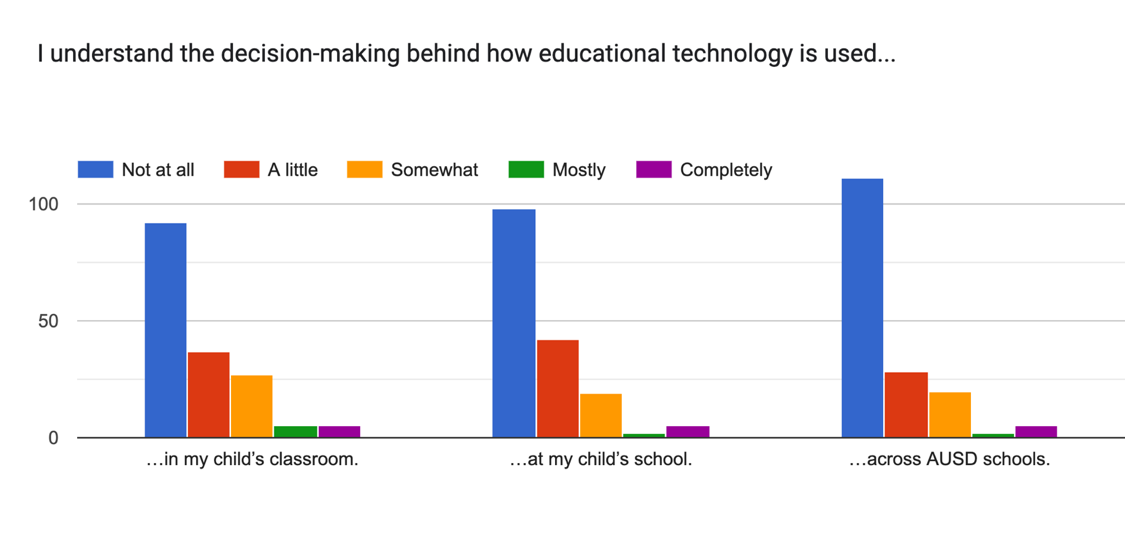
76% understood little to nothing about how EdTech decisions are made at school;
84% reported understanding little to nothing about how decisions are made at the District level.
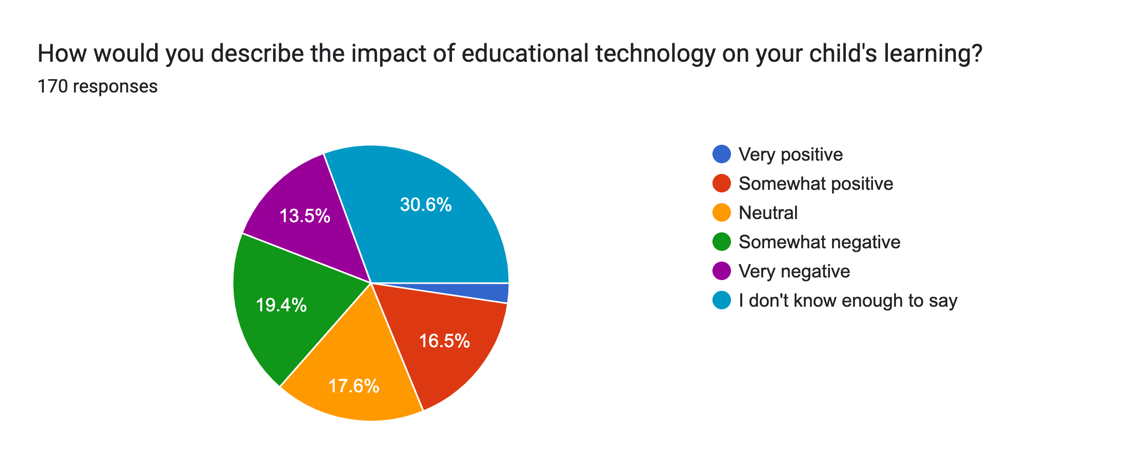
2. Many parents hold skeptical or negative views about the value of educational technology at school.
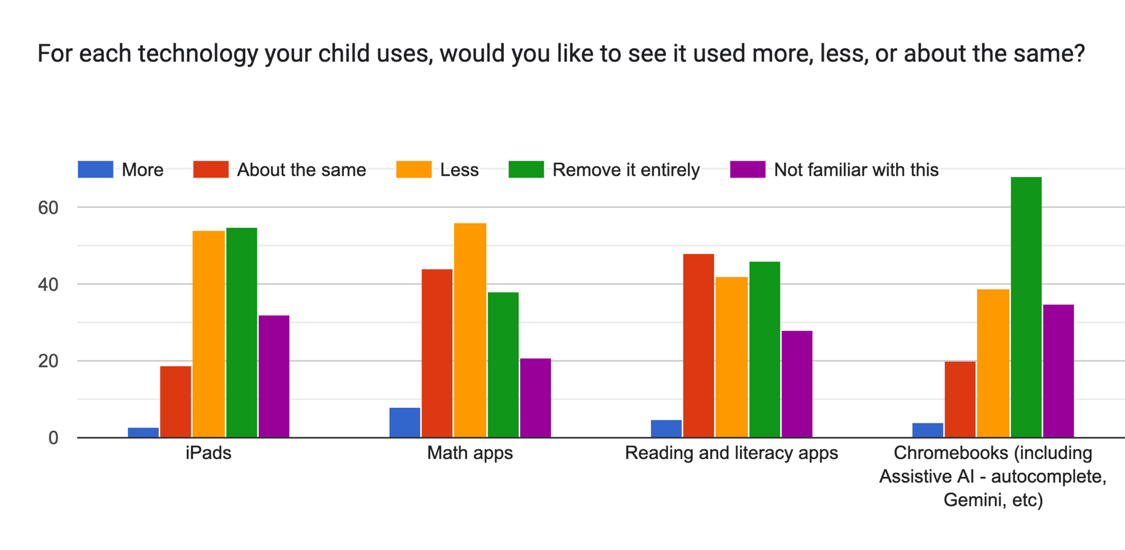
61% of parents would prefer a reduction or elimination of iPads; 61% would similarly prefer reduction or elimination of Chromebooks.
54% of parents would support reduction of math applications, and 50% of parents would support reduction of reading applications.
92% of parents are very uncomfortable with their children exposed to ads on school devices.
71% of respondents are very uncomfortable with corporate harvesting of student data via devices.
Parents shared concerns across an array of categories, including data privacy, exposure to advertisements, displacement of hands-on learning, distraction and gamification, and overall health concerns due to screen time.
3. Parents recognize that screen time at home is part of the bigger picture.
62% of households limit screen time to under 1 hour per day; only 3% of families don’t limit screen time.
Snapshot of Survey Data as of 6/1/26
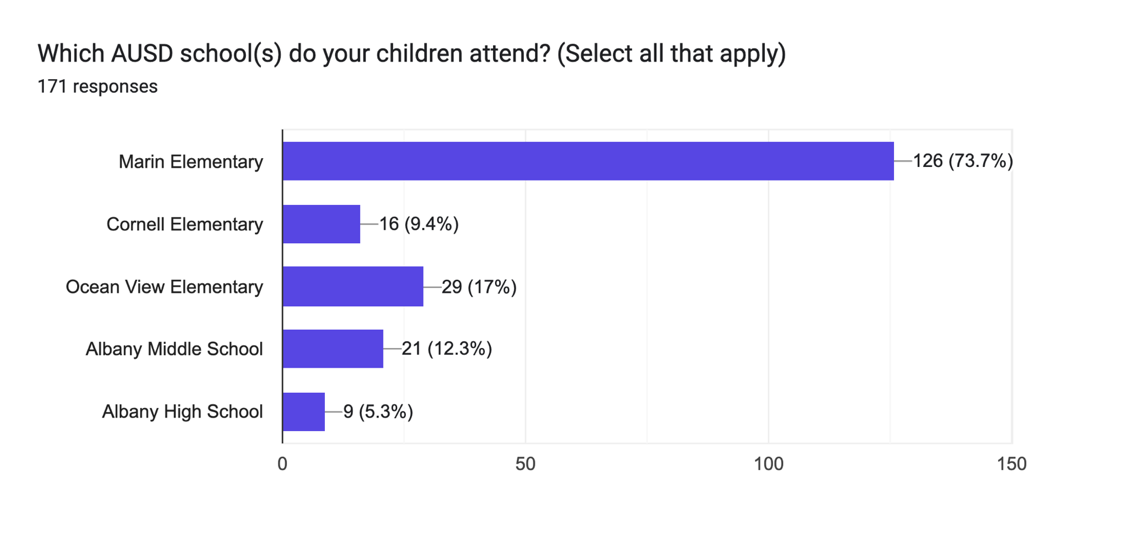
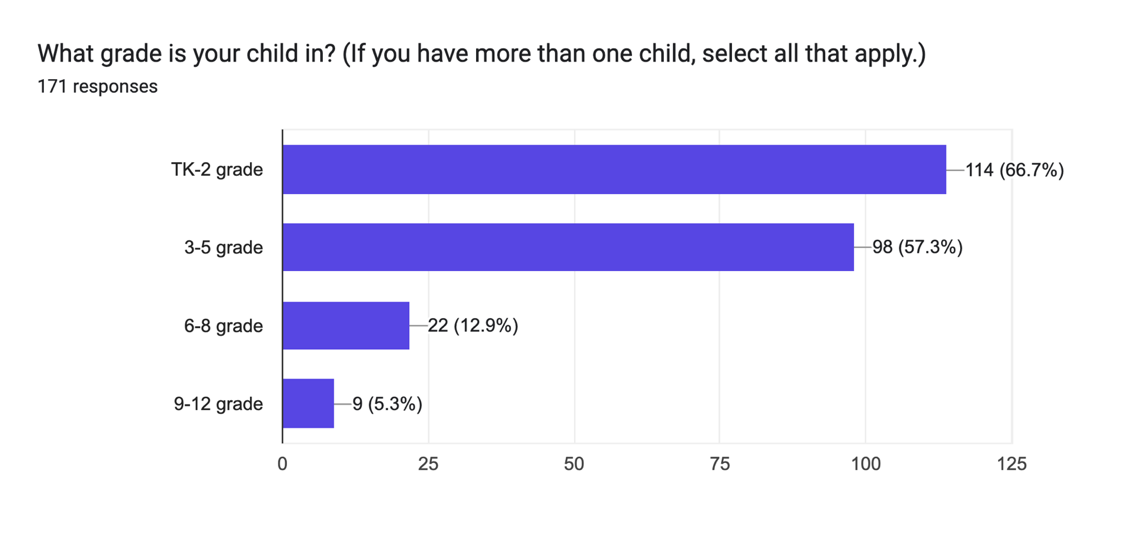
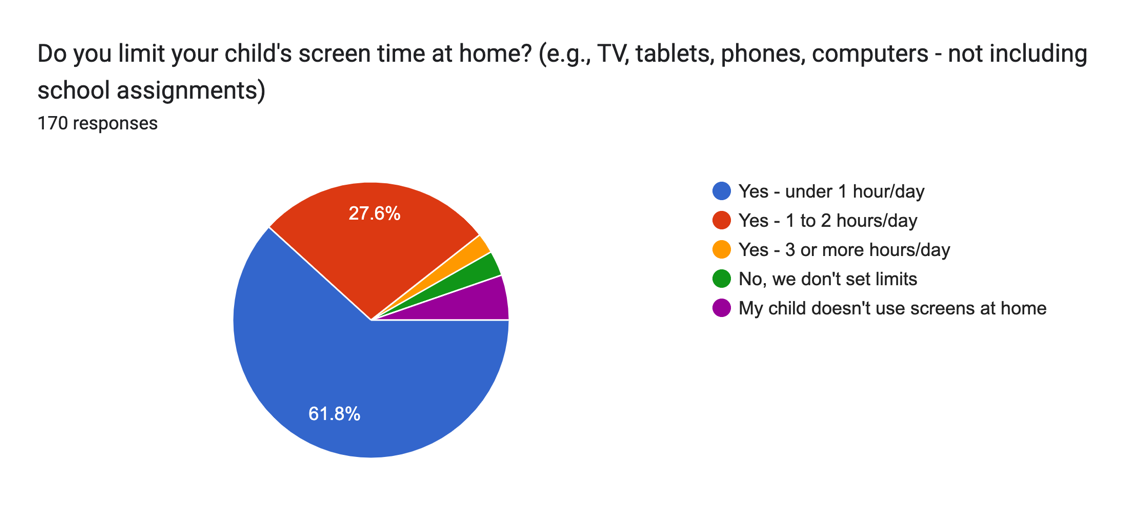
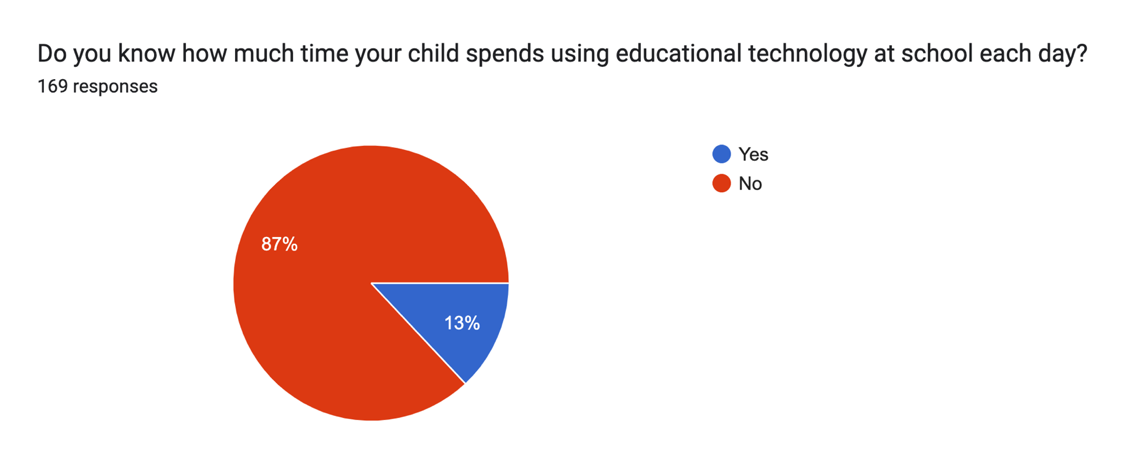
Responses highlight a lack of transparency, concern about volume of screen use, and a desire for a clear, written policy (rather than verbal summaries).
Sample comments (from over 85 comments shared) include:
“Information about how often educational tech is used in each grade should be provided before this survey. As it stands, I actually have no clue how often it’s used in my Kindergartener’s class. In general, my family supports little to no educational tech in classrooms.”
“Please share as much as possible how this is being used and why.”
“Sometimes my child says there are videos at school, but I don’t know how often.”
“Kindergartener has too much. I would prefer none in kindergarten but I also know this is what allows teacher to do more small group work. For third grade I think it’s been fairly well used and minimal.”
In response to the question:
“Have you observed examples of educational technology benefiting your child or other students at AUSD schools?”
38% cite no benefit (“no,” “never!” are frequent responses in this category).
28% of parents see math apps as beneficial.
18% see digital literacy (for example, typing drills) as an important positive benefit.
7% note the importance of tech for developmental differences and/or assistive use-cases.
Responses include:
“For me, it does seem to ratchet up engagement, but usually at the expense of actual learning (memory, recall, confidence, resilience). My kid gets fixated on the "game" aspect of many of the apps and loses a sense of asking questions or collaborating with a teacher / peer/ student when frustrated. Often I have seen him struggle with simple problems simply because of the nerves of trying to race the clock / beat a monster.”
“I have seen some benefit to math app (Reflex) for drill practice to memorize math facts; however I think the same memorization goals could likely be achieved for many students using flash cards...without potential unintended consequences of screen time, external rewards of gamification, etc. Unclear to me whether there are students for whom the app version is actually more effective, and if so, at what cost.”
“Prep for future schooling/workforce, self-paced learning.”
My son is neurodivergent, and definitely much more engaged when he is learning on a screen. That said, the line between "engagement" and "addiction" is a very fine one, and I think the most valuable skills are the ones that screens not only cannot teach, but actually prevent students from acquiring.”
In response to the question:
“Do you have concerns about how educational technology is used in your child's classroom or in other AUSD classrooms?”
42% of responses note the displacement of teacher-led or hands-on learning by screens.
38% comment on negative ramifications of screens for focus, attention, and overstimulation.
30% express concerns about gamification.
22% underscore lack of information from school/district on usage and choices.
18% note risks/costs in terms of privacy.
8% report no concerns/neutral feelings.
Responses include:
“Concerned about attention/focus, social skills, eye strain, screens replacing hands-on learning.”
“Yes. I'm worried my son has a skewed view of his skills and that will affect his confidence. Example: He thinks a higher level in Happy Numbers determines his proficiency in math, and compares himself to other students with respect to whatever level they're at in Happy Numbers.”
“Yes, all of the above. We have a 30-minute daily screen limit at home and no personal devices. These apps and devices are designed for profit, not children. Any school tech use should be extremely limited and under direct adult supervision. A dedicated computer lab with a trained instructor — focused on how technology works, safety, and basic skills like typing — is appropriate. Personal devices in the hands of young children, unsupervised, is not.”
“I would appreciate more disclosure about amount of time spent on a screen. I am not informed by the teachers or principal. And I’m not aware of a policy or guideline. I do trust the teachers and principal, and I assume they are being deliberate and thoughtful.”
Comment themes include: a desire for transparency, safety, and physical well-being.
28% of respondents flagging AI specifically as a concern, both now and in the future.
10% of parents see devices/apps as neutral or constructive.
“The device is unimportant. I also don’t mind math apps if they’re good. The ones my kid is using don’t seem beneficial. If he’s bored, then that means they aren’t adaptive in the way they should be. I work in the math curriculum and adaptive math app industry, and I am familiar with the programs my son uses. There are better ones, and they should be used about 45 minutes a week in first grade, not 45 minutes a day.”
“I would like to see more power returned to the teachers who are truly invaluable and very knowledgeable. They should be the ones holding administrative privileges for all class computers and be able to block and unblock anything they find questionable or useful.”
“I believe there should be a burden of proof BEFORE use. Teachers, parents, and students engaged on adoption. And the studies paid for by the edtech companies based on in-app is not it. The fact that AI tools are on for young kids who are just learning to write, critically think, spell is insane. I work with executives across the globe and they have all realized AI is just a tool, and what they need are people who can critically think AROUND a tool. Kids need to develop the critical thinking skills to be prepared for the world and we are harming their ability to do so.”